Aircraft Design • Aerodynamics • Trade Studies

Twin Jet Airliner

Aircraft design project featuring full CAD modeling, structural drawings, and wing/stabilizer analysis.

SolidWorks Aircraft Design Aerodynamics Trade Study Presentation
Previous image preview
Next image preview

Project Overview

The objective was to design a new narrow-body twinjet competitive with the A320neo and 737 MAX, targeting a 5–10% efficiency improvement. The design focused on minimizing fuel burn per seat while maintaining reliability, practical development, and long-term profitability. The project was approached as a system-level problem, where each design decision supported overall performance and business viability.
What I Worked On

  • Benchmarked the aircraft against Boeing 737 MAX families
  • Used aerodynamic and technology trade studies to identify the strongest efficiency drivers
  • Help calculate optimal drag bucket for airfoil selection
  • Created full CAD model in SolidWorks
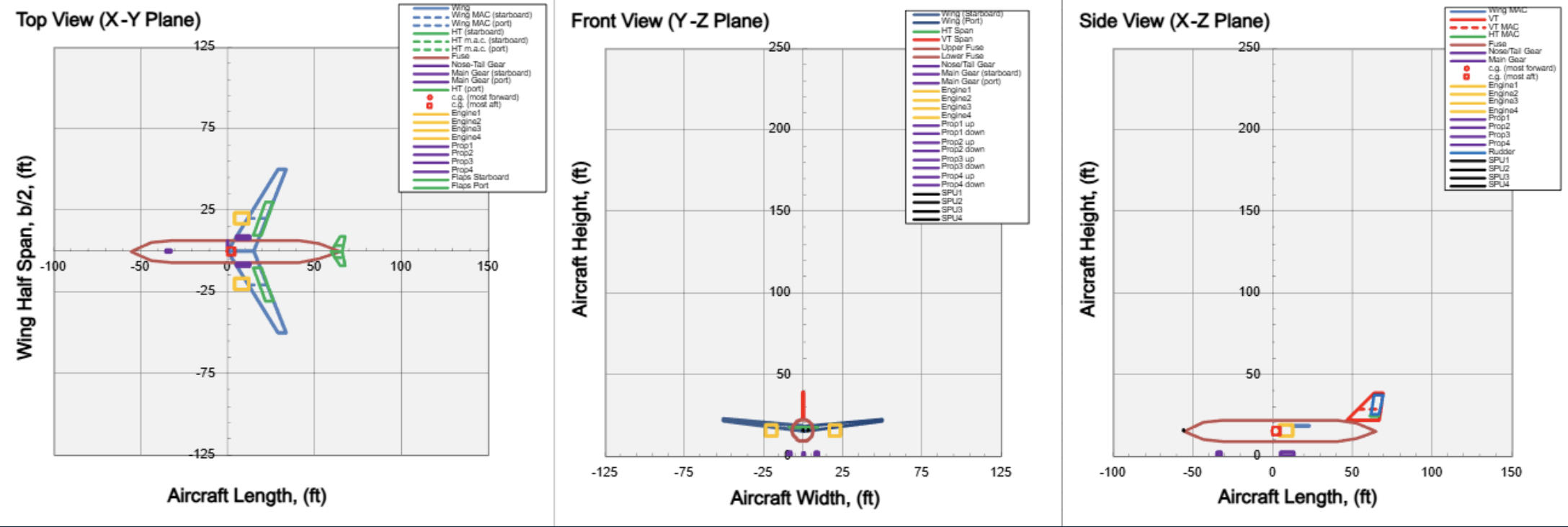
Twin jet aircraft three-view and model layout

Final Configuration

The three-view layout was developed from trade studies across fuselage, wing structure, landing gear, empennage, flaps, and engine placement. These studies defined the final geometry by balancing aerodynamic performance, structural layout, and overall system integration.

Design Logic

Parameter Highlights

End cap components

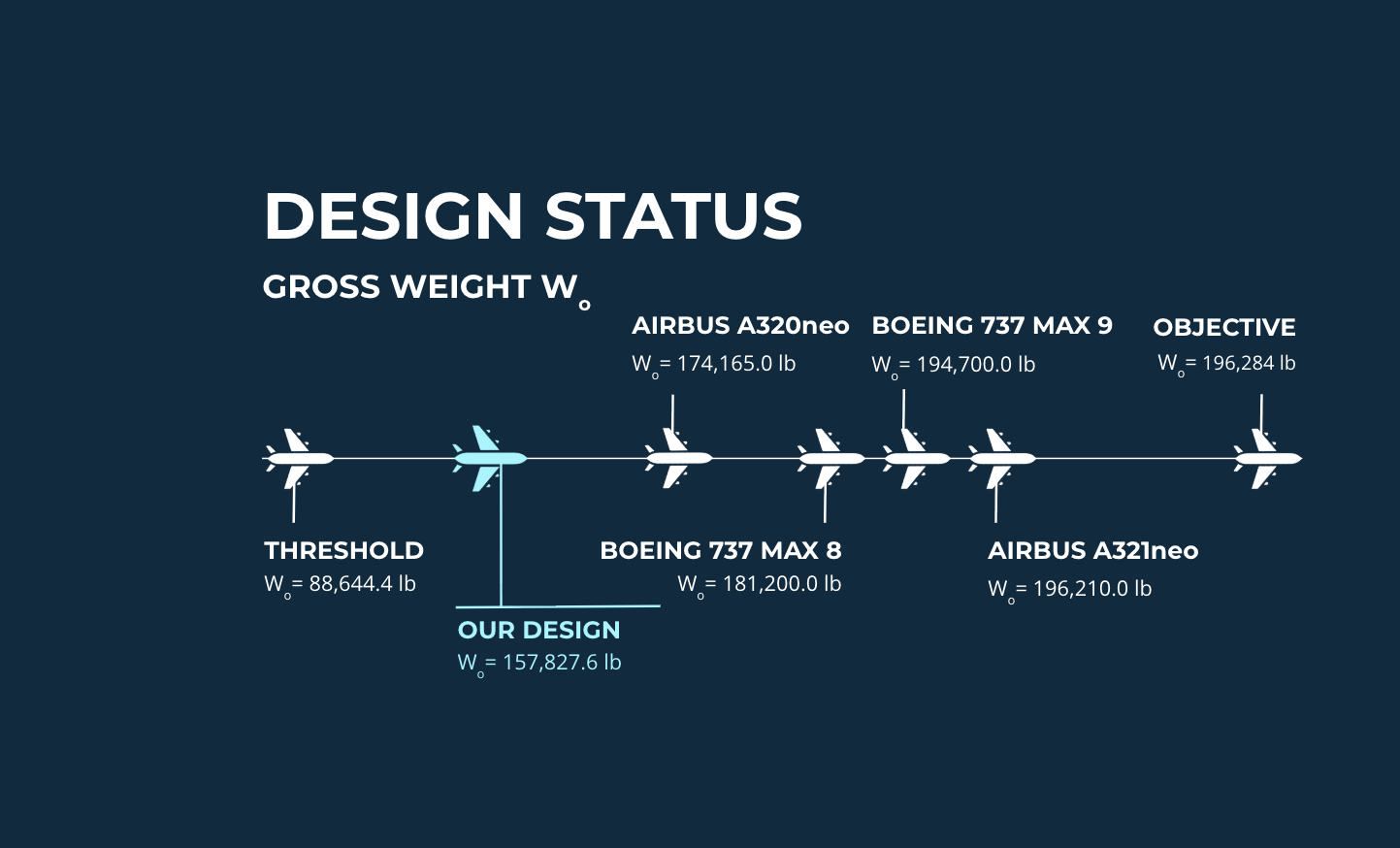
Competitor, Threshold, Objective

Benchmarked aircraft weight against competitors to define target design range and performance goals.

Previous image preview Main slider image Next image preview

Airfoil

NACA 63(2)-415 was the selected airfoil based on target lift coefficients and transonic cruise performance requirements.

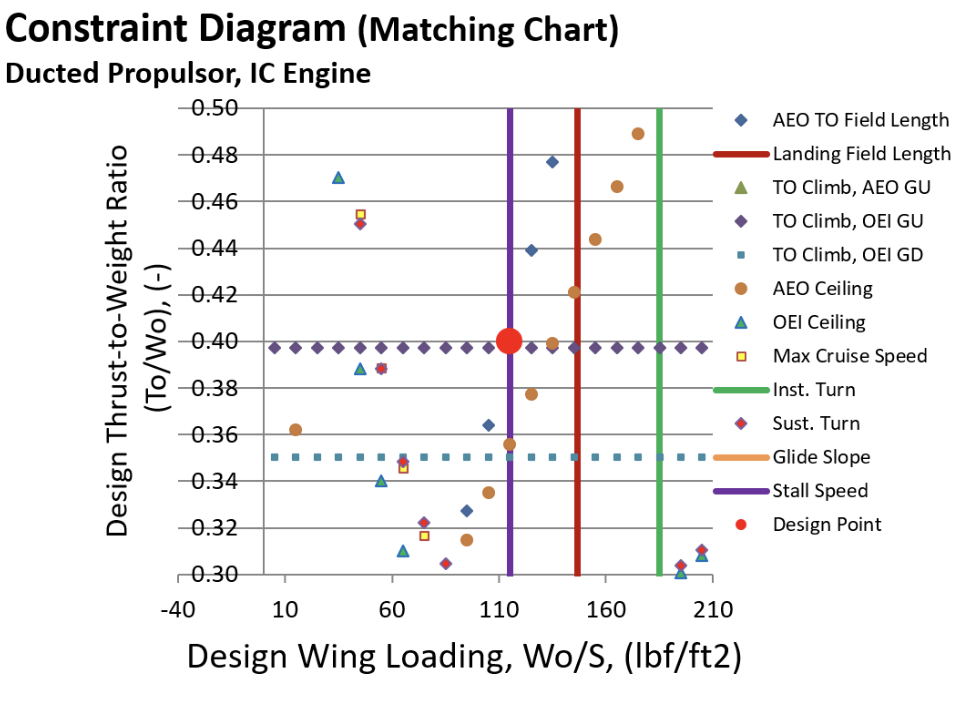
Matching chart

Matching Chart

Used constraint analysis to determine optimal wing loading and thrust-to-weight ratio for design feasibility.

Aircraft Design

Major Component Highlights

Previous image preview Main slider image Next image preview

Fuselage

Sized to meet passenger capacity and layout requirements while maintaining aerodynamic efficiency, using fineness ratio as a key design parameter.

Previous image preview Main slider image Next image preview

Wing, High-Lift Geometry

Designed to meet cruise performance goals while enabling effective takeoff and landing through high-lift integration.

Previous image preview Main slider image Next image preview

Empennage

Sized to ensure stability and control, supporting a balanced and controllable aircraft design.

What I Learned & Future Improvements

This project improved my understanding of aircraft design as a system-level problem, where aerodynamic, structural, and performance decisions are closely connected. I gained experience using trade studies to guide design choices and balance efficiency, practicality, and performance. In the future, I want to explore more advanced aerodynamic analysis and refine the design with higher fidelity tools to better capture real-world performance.

Contact Me

Feel free to reach out for projects, collaboration, or opportunities.